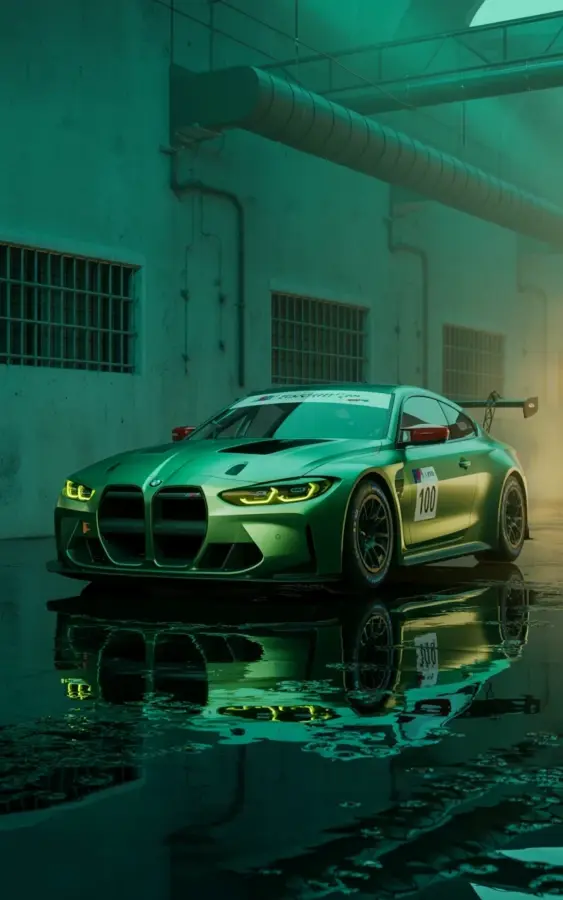
You don’t need a perfectly polished studio to make a race car look like a million bucks. In fact, you might be better off without it. I recently came across a picture of a BMW M4 GT3 sitting inside a gritty, dimly lit warehouse, and honestly, it stopped my scroll dead in its tracks. The entire mood of that photo came from the backdrop, not just the car, which is a lesson every automotive photographer should take to heart.
The car in question is a forest green metallic beast with the number “100” plastered on its side, and it was parked right in front of a raw concrete wall. Barred windows threw sharp little patterns of light across the bodywork, and the blue-accented LEDs in the headlights looked like they were cutting through the haze. It was one of those rare moments where the environment does half the work for you, so let’s break down exactly why this industrial setting worked so well.
Why a Moody Warehouse Beats a Sterile Studio for Race Cars
A GT3 car isn’t supposed to look comfortable. It’s a machine built for the track, for curbs, for gravel traps, and for the kind of heat that makes the air shimmer. Placing a BMW M4 GT3 in a clean white studio with perfect softboxes might look technically impressive, but it strips away the personality. You lose the sense of danger and speed that makes these cars exciting in the first place.
Warehouses and factories have a certain soul to them. The peeling paint, the oil stains on the floor, the dust hanging in the air, it all adds a layer of history that a seamless backdrop can’t fake. The car starts to look like it’s part of a story, not just a product shot for a brochure. You get grit, texture, and a sense of place that immediately sets your work apart from the generic catalog look.
How Concrete Walls and Barred Windows Shape the Composition
The raw concrete in that photo wasn’t just a grey slab behind the car. It acted as a neutral canvas that made the forest green metallic paint absolutely sing. If you’re shooting a car with a bold color, a dull and muted background is actually your best friend. It lets the paint do the talking without any visual screaming matches.
Those old barred windows were the real secret weapon though. They weren’t just there to look moody, they created natural light patterns that fell across the roof and the hood. On a bright day without any diffusion, you get harsh, hard-edged shadows. In a warehouse like this, the windows act like giant barn doors or softboxes, scattering the light and giving it a diffused, soft quality that flatters the curves of the bodywork.
- Use leading lines: Concrete pillars, floor seams, or pipes can point straight at the car’s front splitter.
- Embrace the shadows: Let half the car fall into darkness, it adds mystery and depth.
- Check the background: Make sure no trash can or random pallet looks like it’s growing out of the roof.
- Use negative space: Give the car room to breathe, especially in the direction of the nose.
Creating Car Lifestyle Shots with the BMW M4 GT3
This is where the car lifestyle aspect really kicks in. The photo isn’t just about the hardware, it’s about the vibe. You almost want to imagine the crew rolling the car out after a long night of setup, or the driver doing a final inspection before a morning race. The warehouse setting sells that narrative instantly.
I like the idea of shooting a series here, not just one hero shot. Start with a wide shot showing the scale of the room, the car looking small in the middle of this massive, echoing space. Then move in for the details, like the M badging on the kidney grilles or the giant rear wing. The contrast between the race car’s high-tech precision and the rough, industrial decay is a combination that never gets old.
To make it feel like a genuine lifestyle edit, you need to tell a story. Maybe it’s a shot from above showing the concrete floor stained with tire marks leading to the car. Maybe it’s a profile shot that captures the wide stance and the aerodynamic side pods. The key to a strong lifestyle image is making the viewer feel like they are present in the room, like they’re part of the crew.
Mastering Race Car Photography in Dim Conditions
Shooting in a dimly lit warehouse is a technical challenge, but it’s a rewarding one. This is where your exposure settings become your best friend. I always advise shooting in manual mode and keeping your ISO as low as possible while monitoring your shutter speed. The ambient light in an industrial space is usually mixed, a combination of tungsten bulbs and whatever daylight sneaks through the windows, which can create a wicked color cast.
Here’s the thing, you want to use that to your advantage. The blue accents in the BMW’s LED headlights looked so cool because they contrasted perfectly with the warm, dim light of the warehouse. If you have a white balance that leans slightly warm, those blue tones will pop even more. Don’t let the camera decide for you, take control and dial in a look that complements the paint.
For the final edit, embrace the moody aesthetic. Don’t be afraid to lower the exposure slightly or boost the blacks to make the shadows richer. The goal is to keep the detail in the bodywork while letting the background fade into a comfortable darkness. The car should feel like it’s emerging from the gloom, not just sitting in it.
Styling and Details That Sell the Industrial Background
The details in the livery are what connect the car to the location. The number “100” in bold, the M colors, the carbon fiber splitter, they all have a raw, purposeful energy that matches the concrete. When you’re shooting, move around and look for those small contrasts. The blue LED glow hitting the concrete floor, for example, is a detail you want to be prepared to capture specifically.
Don’t forget about the lighting. If you have an LED light or a flash, bring it in to shape the scene. You could backlight the car to create a rim light that separates the hood from the dark background. Or use a light to splash some color onto the concrete wall. The warehouse is a playground, not a limitation. Ok so, the results from using a single light source to target specific areas of the car are always worth the setup time.
Also, watch for reflections. The polished or even dusty concrete floor can double as a giant mirror. Parking the car over a wet patch can create a stunning reflection, but you have to be careful it doesn’t get too busy. A little reflection adds depth, a lot of reflection becomes a distraction.
Turning a Photoshoot into a Curated Shootout
If you’re planning your own shoot, treat the warehouse like a location from a film set. Scout it first, walk the perimeter, and note the time of day when the sun hits certain windows. Look for specific areas, like a loading bay with a roll-up door or a corridor with exposed pipes. Each nook brings a different flavor to the same car.
Throw your own twist on the concept. Use smoke bombs to mimic a bit of morning fog rolling over the nose of the car. Hide a couple of extra lights at floor level to cast giant, dramatic shadows on the wall behind. Move the car multiple times during the shoot; a GT3 car looks completely different when viewed from a low front three-quarter angle versus straight on from the side.
Ultimately, the backdrop is doing half the work, and you should never ignore it. Whenever I look back at this specific BMW M4 GT3 shot, I can almost feel the cool air of the warehouse and hear the echoing footsteps of the crew. That’s the power of a location that adds to your subject. Surround your race car with a setting that has its own character, and you’ll get a result that feels planned, professional, and deeply cool.
If you’re feeling stuck in a creative rut, try finding your own industrial space and just shoot. Pay attention to how the car interacts with the light and the texture around it. Use the environment to your advantage, and you might be surprised at what you create.
Got a favorite spot for shooting cars? I’d love to hear where you like to park your subject for the best results.
Leave a Comment